A Writer’s Internet History…

So I’m writing this story about an angel that saves a boy from being recruited into a local gang.

And I’m writing a scene where I’ve had to do some research:

  • What are gang slang terms?
  • What types of guns are most commonly used by gangs?
  • What drugs are most commonly sold/used by gang members?
  • What types of cars are popular with gang members?
  • What would a “tricked out” car have?  (rims, lights, etc.)
  • History of Bloods and Crips
  • Known East Coast gangs
You get the idea…
Let’s just say I’ll be deleting my internet history after this story is finished!  I don’t want Google to start sending me ads for… uhhh… gang paraphernalia or whatever.  Yikes!
(And I’m not the only writer friend who’s concerned about this.  This was dinnertime conversation the other night.  Weird things we’ve had to look up for stories.  A writer’s internet history can be a scary thing!)

What I’ve Learned about Writing Summer ’11

It amazed me last summer how much I learned about myself as a writer.  Last summer I learned that writing exercises can blossom into full characters and book ideas.  I learned the magic of moving scenes around and the changes it can have on your narrative.  I learned how to read as a writer.  This summer I definitely grew too.

What I’ve learned in Summer ’11 about my writing:

  • I’m a better realistic fiction writer than I thought… or wanted to be.
  • I learned there are two threads in a narrative, emotional and action.  I’m pretty darn good at the action side, but sometimes neglect the emotional thread.
  • I’m pretty darn good at creating a plot skeleton in my first draft.  *pats back*
  • I’m not so good at deciding on a point-of-view and sticking to it.  *shakes head*
  • I’ve had a lot of experiences.  And those experiences are going to come out in my writing subconsciously.  It’s then my job to use them… and disguise them!  Because I’m not writing an autobiography.  I’m a fiction writer.
  • I’m not a wordy or verbose writer.  I’m precise.  And it’s totally okay if I don’t have long, elaborate descriptions.
  • Part of the reason I’m okay with not being wordy: Readers usually can’t remember more than three details when you’re describing something.  (Learned that in class last night.)  And I noticed that I tend to describe things in threes anyways.  So pick three GOOD details instead of describing every last little thing.
  • I can crank words out!!!  Never thought I’d write over 60 pages in such a short amount of time while also doing reading and critical analysis.  I have no more excuses over the school year.  I can make it happen.
I’m sure there’s more that I learned, but those are the biggies.
One thing I want to learn:

Is there a way to figure out your “word count for the day” when you’re revising?  (Like deleting whole paragraphs and writing new ones)  Without stopping to add and subtract constantly?

Would love to know!

Everything is coming together!

I feel much better since my last post.  All my assignments for class are coming together.

Goose Girl Adaptation aka Dead Horse Talking is now revised and ready for it’s final critique!  I had to work on fleshing out the relationship in the story and providing more closure at the end.  Summary of story: A childhood friendship is on its last leg as two teen girls grow apart, and a betrayal by one girl will be the last straw.

If you’re interested in reading, Dead Horse Talking, shoot me an e-mail at hughesblog.gmail.com

My second short story (after driving me a little crazy) is now ready to be revised.  I had a major brainstorming session and now know where I want to go with it.

For my YA Science Fiction class, I now finally have a paper topic.  I’m going to examine the female archetypal pattern of maiden to mother to crone in the character of Miranda in the YA post-apocalyptic novel, Life as We Knew It by Susan Beth Pfeffer.

For my Forms and Boundaries class, I’m going to do a short presentation on how graphic novels engage reluctant readers.  I will be using the texts Maus by Art Spiegelman and Malice by Chris Wooding.  I’ll do a whole blog post on my presentation info sometime next week!

And I’m seeing Harry Potter DH Pt2 tomorrow with my Mom and Brother.  Who are coming to visit!  Because they are awesome!  Woo hoo!

The Subconscious Mind

I had a little bit of a breakdown today because I realized a lot more of me is making it into my stories than I intended.  And I don’t like it.

I was critiqued last night in my Fantasy class about a story I’d written from the point-of-view of an angel.  The story was about a teenage angel who goes on her first mission to Earth to help someone.  All she is given is a gigantic manual as her guide to helping people.  She goes down to Earth, is overwhelmed, but accepts a mission to help a mother who is concerned about her son.  The boy is being approached by a gang that wants to recruit him.  The angel ends up helping him by reversing a terrible choice he makes, thus giving him a second chance.

So after my critique, and having all these questions thrown at my under-developed story, my brain was buzzing.  This morning I was thinking about a big question that my teacher had asked me.  “Why did you turn Heaven into a bureaucracy?  It’s interesting and funny, but you need to think about why you did it.” (I’m paraphrasing her here.)  She also asked what it was saying about Heaven (and God) that they are sending their angels out unprepared with nothing more than a book.

So after looking up the definition of a bureaucracy.  And thinking.  I had a terrible epiphany.

This story was a big giant metaphor for my feelings about teaching.  And I hated it.

I am the angel, getting thrown into the world of trying to help people, with little more than a “manual.”  And I get put into situations that I don’t know the answers to, but my actions are life-changing to the people I’m trying to help.  And ultimately, I’m giving kids chances or opportunities that will help them escape evil in the world.

Yes the angel in my story was unprepared and lost at how to perform a miracle.
But at least she had magic words.

I feel unprepared for the miracles I’m expected to perform in my classroom.
And I don’t have any clue where to look up some magic words.

I came to Hollins to read and write, and pursue MY DREAMS.  I got very angry and upset to see teaching working it’s way into my writing subconsciously.  The subcontext of my story was not something I wanted to tackle in my writing, but it appeared anyways.

I’m leaving this story alone for a few days.  I need a break from it.  Especially now that I realize how personal it is, it’s going to be draining to revise/finish.

In the meantime, I’ll work on my teen girl story.  (Which also turned out to be much more personal than I intended, but at least it’s not about teaching!)

This summer is going by entirely too fast.

The Character Game

In my writing fantasy class, author Ellen Kushner came in for a visit and talked about characterization.  She shared with us a fun and amazing little game which she dubbed “The Character Game.”

The Character Game is a way to get inside a character’s head particularly if you’re starting a novel or feel like your characters are flat and not fleshed out enough.

Very simple.  Only two people required to play, though you can have many more.

Author-Player decides on a character and will then have to answer all questions as if they are that character.

Question-Player then proceeds to bombard Author-Player with questions.  These questions CANNOT be plot questions.  Think more like “first date” getting-to-know-you type questions.

“What’s your favorite color?”
“What do you eat for breakfast?”
“What’s your least favorite smell?”
“What’s your favorite holiday?”

Those types of questions.

Rough game time is 20-30 minutes, and by the end of that time, most authors have an epiphany type moment where their character is suddenly a fully actualized real person.

Trust me, it works!

And it’s fun!

Anyone want to play?

Inside Scoop on the Newbery Medal

On Wednesday, we had a visit from Laura Amos, a current committee member for the Newbery award.  While she couldn’t divulge anything about upcoming contenders for the 2012 award, she did give us insider information on what it’s like to serve on the Newbery selection committee.


She first went over the history of the Newbery.  Which you can read here.  The founder of the Newbery, Frederic G. Melcher, was ahead of his time when he demanded that the selection of the winner be kept a total secret until the official announcement.  The secrecy has been great for publicity and creates excitement and speculation each year.

The measures to maintain secrecy were pretty fun to hear about.  The committee is made of 15 members who meet 4 times in person throughout the year.  The room that they meet in is never used and kept locked other than the 4 times they meet.  I couldn’t help but picture a Mission Impossible style sneak in to plant a hidden microphone so you could hear their discussion and the winner.  Hehe!

You have to be either nominated or appointed to the Newbery committee and they have a new rule that you can only serve once every 4 years.  This was done to encourage more panel variety and to bring in fresh faces.

The committee reads books throughout the year (Amos said she’s gotten boxes of 30 books sent to her house from publishers!) and on the 1st of every month they can send “recommendations” to other committee members.  Once a recommendation is made, all 15 members have to read the book.  The final day for recommendations is December 31 of that year.  When they meet to discuss and vote on the winner, it starts on a Friday morning and they must have a winner and press release prepared by 6:15am Sunday morning.  It is often difficult to get 15 people to agree, and they often have to vote, discuss, vote again, discuss, vote again, discuss, etc.

The runners-up were given the official title of Newbery Honor books in 1971.  And it is not required to name any Honor books each year.  It is up to the committee.

Cool bit of Trivia:
In 1953, the Newbery Medal Winner was Secret of the Andes by Ann Nolan Clark.  The runner up was Charlotte’s Web by E.B. White.  It’s rumored that someone on the committee didn’t like E.B. White and didn’t want him to win.

It was a really interesting lecture, and I’m probably leaving a ton out.  But if you have any questions, ask me!  I might have heard the answer!

For Writers:

I highly recommend following the SCBWI blog.  Every Friday, Alice Pope posts interesting news articles related to publishing and children’s lit.  I always find them fascinating and feel more up to date in the biz because of it.

A sampling of articles from this week:

Why You Should Own Your Domain Name (GalleyCat)
Having an online presence is critical for writers to market their work. In a recent blog post, author John Scalzi urged writers to purchase their own domain name online.
Tablet, E-reader Owners Also Print Junkies (MediaPost)
People who are heavy print magazine and newspaper readers might seem like the last ones to embrace gadgets like tablets and e-readers. But new research from Gfk MRI shows tablet owners are 66% more likely than the average U.S. adult to be big print magazine consumers and 54% more likely to be heavy print newspaper readers. Similarly, e-reader owners are 23% more likely to be print magazine enthusiasts and 63% more likely to get newsprint on their hands.  
Cherish the Book Publishers—You’ll Miss Them When They’re Gone (WSJ)
The Klondikers of digital publishing are rushing to stake their claims, inspired by tales of the gold to be found in the Kindle hills. A few pioneering prospectors have indeed struck it rich with light entertainments, most famously Amanda Hocking, who is a sort of Tolkien for our times (if Tolkien had been an avid fan of “Star Wars” instead of an eminent scholar of “Beowulf”). Her self-published e-books racked up so many sales over the past year that St. Martin’s Press recently signed her for some $2 million.

Writing Diverse Characters

I teach in a very diverse school, and because of that I see the need and desire for literature with characters that are diverse.  My kids get excited when they hear about books with characters like them.

I wonder if I would like reading as much as I do if I hadn’t seen characters and families that are a lot like mine.  I grew up on Boxcar Children and American Girl.  These books have white main characters and probably also have morals and cultural values that are similar to my own.

So here comes my dilemma.  They say write what you know.  Does that mean write from the cultural perspective you know?  Can I not write from a Latino or African American viewpoint because I don’t understand?  But then how do we get more diverse books on bookshelves?

I’m in a graduate program for Children’s Literature.  My classmates want to write, create, and publish books for children.  Let me breakdown the races of my classmates:

Of the 24 people I have class with:

  • 22 are white females
  • 2 are black females

There are no Asian or Hispanic people in my classes.

So who will write these books that reflect diverse cultures?  I see the NEED for them.  My kids WANT them.

This subject is on my mind for two reasons.

ONE- My most recent short story was as close as I’ve come to touching on race.  I wrote a story from the point of view of an racially ambiguous angel who saves an African American boy from being recruited into a neighborhood gang.  I had some experience with this issue, but it was still slightly uncomfortable to write in the way that it was outside my comfort zone.

TWO- I spoke with a professor today about a novel I’m working on.  I’d wanted to use references to the Underground Railroad because my novel deals with oppression and running away to freedom.  My professor cautioned me that unless my main character was going to be black, then I need to be very careful “touching” the Underground Railroad because people could take it the wrong way.  Right now, my main character is mixed/racially ambiguous, and I have a cast of characters who is very diverse.  But my cast is not strictly black.  She recommended I look into the Civil Rights movement instead.  Or connect it to the Holocaust because it sounded more connected to my themes.  But the Civil Rights doesn’t fit the aspect of my plot that the characters would be running away and looking for safe havens.  And while I can see the Holocaust connections, I wanted to incorporate some African American heritage.

I don’t have a solution to anything I brought up here.  So much of writing is subconscious and pulling from the experiences deep in the brain.  I don’t think I’ll ever be able to really write from within a culture that I’m not a part of.  I guess I was hoping that I could create racially ambiguous characters and then incorporate historical allusions that brought many cultures to the setting and plot of the text.  But I guess there are serious implications to even doing that.

I’d love to hear any thoughts on this subject.

Brag a little…

I had a fantastic writing day today!

I wrote 3,072 words.
That translates to about 13 typed pages.

I’m on a roll with this second short story  đꙂ

I swear, if I didn’t have to teach, I could bang some books out.  My hands can’t type fast enough and I have no shortage of story ideas.

Week 2 Classes

I wasn’t sure if I was doing the right thing in scheduling my classes for 9am til 9pm on Tuesdays and Thursdays.  I get brief breaks for meals, but I’m sitting in three 3 hour classes for a grand sitting time of 9 hours.  The first day of class wasn’t so bad because it was just going over the syllabus and easy stuff.  BUT MAN!  Tuesday left me a walking zombie.  Tuesday night, I went to buy ice cream and then just kind of stared into space for awhile.  I rested pretty much all day Wednesday and didn’t leave my bedroom til 2pm.  I did better on Thursday because I had rested and I knew what I was in for.  I also got lots of COFFEE.  Which helped a ton.  So…. I’m sorry I haven’t posted in awhile, but here is a brief synopsis of what I’ve been up to:
Science Fiction
This week we discussed books that came early in the development of the science fiction genre.
Tom Swift and his Motor-Cycle
Published in 1910, one of the first affordable hardback series.  Focused on mechanics, engineering, motors, and transportation.
I wasn’t too fond of this book while I was reading it.  The language and topics were very dated.  Most of the characters were flat stereotypes.  The plot was very predictable, but the character couldn’t see the threats and villains right in front of him (which became very annoying).
However, after discussion, I see some merits to the text.  These texts were written for a public that maybe didn’t read literature and so a lot of the explanation and stereotypes were necessary.  The books praised and glorified technology and innovation, which I think we need more of today.  We need more admiration and aspiration towards the sciences as opposed to other careers… athletes, actors, music.  The books also tried to set a morality and behavior standard.
I much preferred talking about Princess of Mars.
This book was much more fantastical and adventure driven than Tom Swift instead of a technology focus.  There were much more vivid descriptions and the characters were more fleshed out.
While we were discussing the book, I realized that the main character, John Carter, is the same name of the legendary hero in Terminator.  Which got me thinking about James Cameron movies, and I realized how many similarities there are between the book Princess of Mars and his films.  There are SO MANY similarities, so I searched around on the internet and found a blurb that James Cameron DID read Edgar Rice Burroughs as a kid.
I’m toying with the idea of writing a paper on Princess of Mars and James Cameron films.  Some similarities I would discuss:
  • John Carter as a Idealistic Time Traveling Hero
  • Romanticized Female Upper Class Figure
  • Humans vs Natives/Aliens
  • Social Class
  • World-Building
The last book we discussed, Skylark of Space, kind of blended Tom Swift and Princess of Mars in that it had the technological aspects but also had space adventure.  I found the book to be a little too heavy on the technical descriptions.  But the most interesting part of the book was there being two of everything: two heroes, two heroines, two villains.  That kind of thing interests me because a lot of what I write has multiple protagonists.
Forms and Boundaries
This week we focused on picture books, which isn’t really my area of expertise nor what I desire to write.  But I can still have an appreciation for picture books.  We looked at two books that break the rules of the picture book genre.  
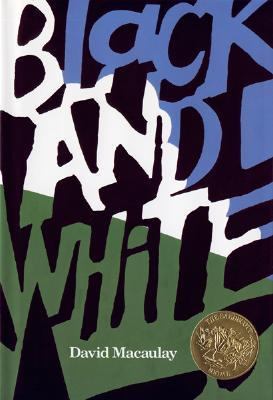
The first book we looked at was Black and White.  This book turned out to be a post-modernist picture book where the story is told in non-linear time with an unreliable narrator.  Basically, the book has four different plot lines, but by then end of the book you are very confused as to how the plotlines are all the same story but the impossibility of them all being interconnected.  For example, there is one plotline that is on a toy train station, but it becomes clear that the parents were at this toy train station… and they are full-sized.  It’s all very mind-bending.  We talked about how a good picture book can be read over and over and still be appreciated.  This book can be read over and over at different ages and you will get something different out of it.
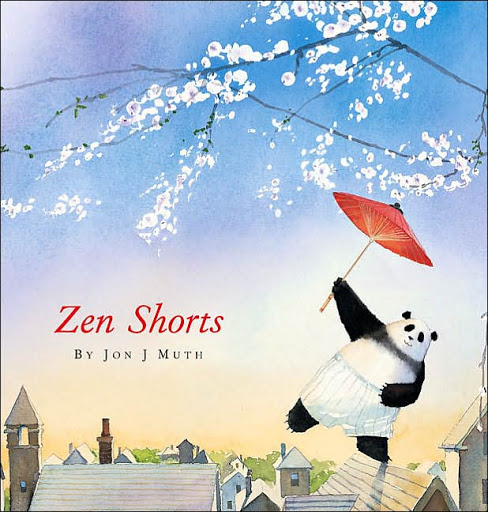
The next book we discussed is Zen Shorts by Jon Muth.  This book was genre bending in how it presents Asian Culture.  The books also makes great use of narrative gap where the author and illustrator leave it up to the reader to fill in what is happening between the unsaid moments in the story.  The story is about how a giant panda with an umbrella arrives in this family’s backyard.  Each of the three children go to visit the Panda and then play games and the Panda tells each of them an Asian folktale.  The book is very charming and I like how it exposes children to Asian culture.
Writing Fantasy
On Tuesday, we discussed and looked at story beginnings.  I love how well-prepared for class this teacher is.  She always has custom handouts for us and great activities planned.  This class, she had taken the first paragraphs of several novels and short stories and looked at what made them effective openings. We examined what information we learned about the characters and their setting.  It was a really good exercise in reading as a writer.
This teacher also thinks writing exercises are extremely important.  She compared it to bar exercises for a dancer or practicing lay-ups for a basketball player.  Doing writing exercises is creating and maintaining neural pathways in your brain.  The more you use the connections in your brain, the easier it will be to access them when you are actually writing.  Also working through different challenging exercises will help you troubleshoot problems you encounter in your writing.  It made total sense to me.  I loved the way she put it.  She recommended a book of writing exercises called Steering the Craft by Ursula K LeGuin, that I definitely plan on ordering.
Our next class we did a brief exercise/discussion about setting.  She emphasized that setting details should not be lengthy in children’s books.  Setting details should be carefully chosen.  The details should be enough to give a picture and convey the tone of the scene.  Kind of a less is more approach that I agree with.  (Though lengthy, detailed, gorgeous setting descriptions are fun to write)  She also said that if you’re going to spend a whole paragraph describing something, it better be important to the plot.  Time spent describing something should be directly proportional to how important it is to the story.
We also did the first four critiques of our short stories.  My piece won’t be up for critique until next Thursday.  So far, I’m very impressed with how the critiques have gone.  For the most part, I feel like my classmates have great feedback and constructive criticism.  However, my teacher is a spot-on critic.  Her feedback is insightful and I enjoy listening and learning from it even if it isn’t directly about my piece.  I’m so impressed with everything that comes out of her mouth.
Our next short story has to be from the point-of-view of a non-human.  It’s very open-ended.  Right now, I’m leaning towards writing from the point of view of an angel.  I have an idea for the plot, but it hits kind of close to home (teaching) and I’m not sure how I’m going to have it end because I don’t know the solution to this very real-world problem.  We’ll see.  I’m very much in the beginning stages at this point.
Have a book series / author blog post that I want to do, but will leave that til tomorrow.  So glad it’s the weekend!

Word Count Wednesday 6/22/11

I know I skipped Word Count Wednesday last week (it would have been zero words), but it was one of those weeks where life took precedence over writing.

I am now at grad school, and in just two short days I’ve written…

2,515 words  ^_^

The atmosphere here is so conducive to writing and being creative.  I could not be happier.

I’m working on a short story for one of my classes.  The assignment is to create an original short story based on the fairy tale “The Goose Girl.”  We read Andrew Lang’s version from The Blue Fairy Book.  It’s free domain, and here’s a link to the text should you wish to read it:

http://books.google.com/books?id=T14ZAAAAYAAJ&dq=lang%20the%20goose%20girl&pg=PA266#v=onepage&q&f=false

The element of the fairy tale that I’m focusing on is the maid who steals the princess’s role and goes to meet the prince instead.  Except I’m giving it a VERY modern twist.  Hint: Think girl groupies of a rock band.  I’m pretty positive no one will go in this direction and I love all the allusions to the original story that I’m able to slip into the modern setting.  So fun!

I have 4 novels and 2 picture books to read by next Tuesday… so I need to go get reading.  I pretty much need to finish a book a day.  Yikes!  I’m almost done with Princess of Mars, and will post my initial thoughts on that book tomorrow!