Behind the Story: Pacing & Description Part 2

Owl & White/Red BookBehind the Story posts will be about what goes on behind the scenes as a writer creates their story.  I’ll be writing about my own writing process and sharing any tips or advice I’ve discovered on my own or gathered on the topic. Hopefully both readers and writers find these posts fascinating!
This week’s topic:
Pacing and Description

Last week I discussed how I learned to pay attention to pacing and why I believe pacing is so important.  For last week’s post, click here.  This week I’ll get into tips and tricks writers can use to take control of their pacing.
Brushstrokes, You Don’t Have to Paint the Picture All at Once
Guess what?  Most of us are writing a whole entire book.  Some of us, that will be 80,000 words.  You don’t need to give your reader every single detail up front.  We are often tempted to, because as the author, we feel like everything in our story is important.  But that’s not the case.  We can reveal things over time.  Do we need to know that the main character has red frizzy hair, freckles, green eyes, small bones, knobby knees, tiny ears, pale skin, a birthmark on her elbow… all in the first chapter?  No.  We don’t.  You can paint her with brushstrokes a little bit at a time.  We have the whole book to get to know her.  Think of it as dating… We don’t need to know everything up front.  A first date where all is revealed doesn’t leave us with anything to wonder about, and that intrigue, that mystery is lost.  You’ll want to start with a basic picture, the essential details, but then let it grow, brushstroke by brushstroke, as the story continues.  Which brings us to Tip #1:
Pacing Tip #1: The Rule of Three
I honestly don’t remember where I heard this tip.  I looked on the internet for some hint as to who I learned it from, but all I could get was that it is general belief.  
Wikipedia states:

“The rule of three is a writing principle that suggests that things that come in threes are inherently funnier, more satisfying, or more effective than other numbers of things. The reader or audience of this form of text is also more likely to consume information if it is written in groups of threes.  Similarly, adjectives are often grouped in threes to emphasize an idea.  The Latin phrase, “omne trium perfectum” (everything that comes in threes is perfect, or, every set of three is complete) conveys the same idea as the rule of three.”
http://en.wikipedia.org/wiki/Rule_of_three_(writing)

The way I’ve understood and employed the “rule of three” in terms of pacing and description: I don’t include more than three details about a person or place in my first description.  I think when I originally heard the “rule of three” I was told that a reader isn’t going to remember more than three details about a character.  Think of Harry Potter.  Three major physical details: Messy black hair, green eyes with glasses, lightning bolt scar.  Those are the three defining physical details everyone remembers.
Now, I’ll show you examples of the “Rule of Three” in action:
From my own WIP, a setting:

The first thing my aunt did upon returning from the funeral was take away my bedroom and force me into the small attic room above the boiler room.  The space could barely fit a bed, and there were crevices between the floorboards wide enough to stick your finger through.  The highlight of the room was a single grimy window.  

I only describe three things in Anne’s new bedroom: the small size, the floor, and the window.  All of which convey the sheer depressing nature of the room.  That’s all you need to know.  I definitely could have described more, but three things was enough.
From my WIP, a character:

“Oy!  Girlie!  You new?”  Pushing one of the screeching metal carts was a girl smaller than me.  Her brown hair was unbelievably short, cropped to her chin, but she wore a long gray skirt, so I knew she was a girl.

Again, I only describe three things: the girl’s small size, her short hair, and her skirt.  It’s enough for you to identify this girl in the future (the small girl with the cropped hair), you’ll remember it, and there’s plenty of space for her to grow as a character.
Here’s some examples from novels you might know:

“Has anyone seen a toad? Neville’s lost one,” she said.  She had a bossy sort of voice, lots of bushy brown hair, and rather large front teeth.
Harry Potter and the Sorcerer’s Stone, page 105

J.K. Rowling describes three things about Hermione (voice, hair, and teeth) when we first meet her (though we later learn a great deal more).

The girl was gorgeous, the kind of girl Clary would have liked to draw–tall and ribbon-slim, with a long spill of black hair.  Even at this distance Clary could see the red pendant around her throat.  It pulsed under the lights of the dance floor like a separate, disembodied heart.
City of Bones, page 6

Cassandra Clare gives us three details about the girl: her body type, her hair, and her necklace.

Her name was Shay. She had long dark hair in pigtails, and her eyes were too wide apart. Her lips were full enough, but she was even skinnier than a new pretty. She’d come over to New Pretty Town on her own expedition, and had been hiding here by the river for an hour.
Uglies, page 27

This example does not stick to the rule of three, but I think Westerfeld still limited himself in terms of description.  A reason why I think he used four descriptors here is because he uses pairs effectively.  Shay is described in pairs of traits: one that is adequate (almost pretty) and one that is ugly.  This is important to the premise of his book, where the characters desire physical perfection more than anything else.  So the pairs were necessary for him, and he limited himself to two pairs and not more than that.  Six traits would have been too much at once, but four traits or two pairs was enough.
When is it okay to use longer description?
I think there are cases that warrant more description than the “Rule of Three” I present here.  I think particularly important characters often warrant more description.  For example, Dumbledore is described in much more than three traits in his first description on page 8 of Sorcerer’s Stone.  He was an incredibly important character across the entire series.  I’ve heard the rule that the length of a description should match the importance of a character or place (longer description = more important).  I generally agree with this rule, but often an author can be a little blind and think every detail is a little more important than it actually is.
I also think unusual settings warrant more description, and readers will be more patient with lengthier description of a strange setting because the strangeness intrigues them.  Readers aren’t bothered by descriptive paragraphs of Willy Wonka’s chocolate factory because a secret candy factory is an intriguing and fabulous setting to read about.  I also think a setting that acts as a character, like Hogwarts, warrants a lengthier description.  Hogwarts isn’t just a place.  It has undiscovered secrets, presents challenges to the characters, and aids the characters in times of trouble.  Hogwarts, in order to become the living place that it is, required that kind of description.  A place that is ordinary, like a classroom or a schoolbus or a grocery store, probably shouldn’t be described in great detail, and I’d recommend the rule of three.  I’ve found the rule of three helps keep me in check and keeps the pace quick.  I can always go back and add more description if I need to.
Writing Exercise #1
Choose three characters and identify the three dominating physical traits of each character.  Then write a brief paragraph for each of them that introduces each character and their three physical traits.
And also, do three settings in your novel.  Choose three settings and identify three defining traits of that setting and write a brief paragraph introducing that setting and the three traits.
Stay tuned next week for my second quick pacing writing tip and another writing exercise!

Overdue Book Review: Feed

The last three months, I was on a blogging hiatus. I missed writing up reviews of several books, but would still like to give my overall thoughts.

Overdue Book Review = Read in July 2012

Feed

by M.T. Anderson
Purchased/Paperback
Genre: Sci-Fi/Dystopian
Big Themes: Media, Advertising, Humanity, Reality
*Grad School Text*

Summary: In the future, everyone has an internet feed implanted in their brain. When Titus takes a weekend trip to the moon with his friends, he meets Violet, a beautiful and intelligent girl. Titus experiences life without the Feed with Violet and his eyes are opened.

What I Loved:

Relevance: This book echoes great dystopian classics such as 1984 by George Orwell and is a brilliant satire of our current internet use and streaming of technology.

World-Building: The world that Anderson creates is memorable and expertly crafted. One of the way Anderson does this is through his use of language and the way he invents new words/uses. You could do a whole study on the way language is used in this book and I’m pretty sure people have.

Characters: Violet is such a memorable and beautiful character that brought me to tears, but a lot of the beauty of her character is in how Titus interacts with her. A lot of people are frustrated and angry with Titus by the end of the book, but I thought the book was realistic and purposeful.

Forewarning:

People have strong reactions to this book. In my class, people either LOVED it or HATED it. I’m in the love camp, but I love dystopian fiction and sci-fi. I think this book is a great commentary on our current society and serves as a poignant warning for what we could become. This is not a dystopian book with a hero, adventure, and a happy ending, unlike a lot of dystopian novels out there right now. It’s a true satire.

Overall Rating: I would definitely give this book five stars for being one of the most amazing dystopian books of the new millennium, a dark cautionary tale.

Winter Break Book List 2012

Today is the start of my winter break. I have eleven glorious days off. I am hoping to get a lot of reading and writing done, and want to share what books are at the top of my to-read list. I literally have to put together a list because I have to pack to go home to my parent’s house. So these are the books I’m taking with me… as well as my Kindle for back-up.

Titles link to Goodreads.
Links to reviews that persuaded me to read the books are included as well!

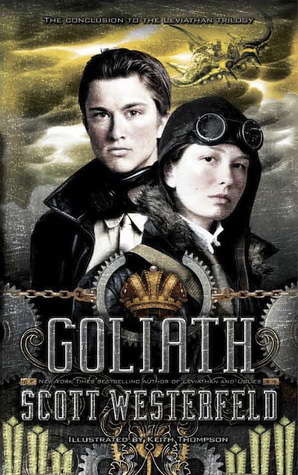
I’ve spent the last month re-reading Leviathan so that I could finish out this series. I finished reading Behemoth last week, and am now ready to tackle the last book in this clever steampunk trilogy. If you love great world-building and spunky characters, you should check this series out!

Re-Read Unwind by Neal Shusterman
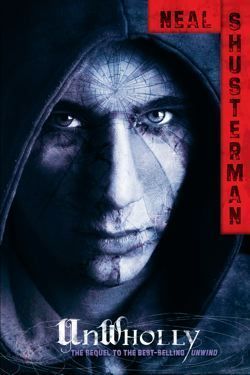
Read UnWholly by Neal Shusterman
Unwind is probably the most eerie and thought-provoking dystopian books I’ve ever read.  The story stuck with me long after I finished.  Originally intended to be a standalone novel, when a sequel was announced years after Unwind’s publication, everyone in my family got excited because we’d all read Unwind.  My mom has read Unwholly already and said it’s genius.  I can’t wait to find out for myself!

Re-Read Daughter of Smoke and Bone by Laini Taylor
Read Days of Blood and Starlight by Laini Taylor
Daughter of Smoke and Bone was one of my favorite books of 2012, and I’ve long been awaiting the sequel after the cliffhanger ending that Laini Taylor left us with.  I’ve heard that this is an emotionally draining but amazing sequel.  I’m drooling a little bit as I look at the book sitting on my bookshelf.  Can’t wait!

Scorpio Races by Maggie Stiefvater
Raven Boys by Maggie Stiefavater
I’ve read every book by Maggie Stiefvater except her two most recent releases.  I love Maggie and adore her blog.  I’ve started Scorpio Races twice already, but life keeps getting in the way whenever I pick it up.  Maggie’s books also tend to take me awhile to get through because her pacing is a little slower than I’m prone to read.  Plus both these books are on the hefty side.  Friends and bloggers are raving about both books and I have had them on my TBR list for awhile now.

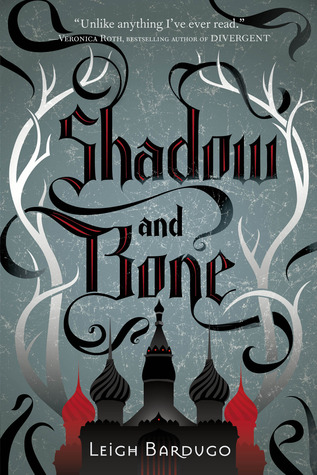
Shadow and Bone by Leigh Bardugo
Everyone is praising this book as one of the best fantasy reads of the year, and I’m eager to see what all the hype is about!

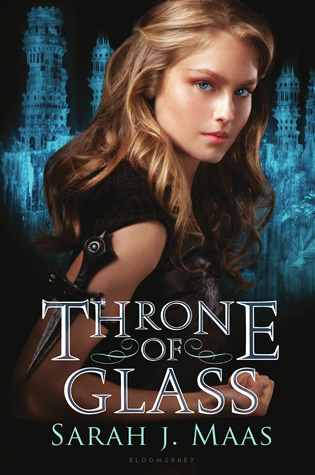
Throne of Glass by Sarah J. Maas
Another book with a lot of hype and praise circulating.  This hardback is begging to be opened!

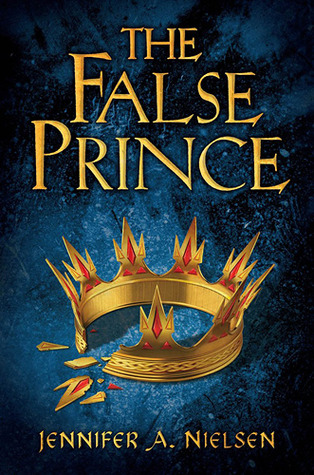
The False Prince by Jennifer A. Nielson
The premise of this book captivated me as well as all the positive reviews.  I’m hoping this is a book I can recommend to my middle schoolers, but we’ll see!

I’m probably overestimating myself with this list, because not a single one of these books are short, quick reads.  But all of them are books I’ve been wanting to read for a long time now.  Here’s to lots of cozy reading days!

Behind the Story: Pacing & Description Part 1

Owl & White/Red BookBehind the Story posts will be about what goes on behind the scenes as a writer creates their story.  I’ll be writing about my own writing process and sharing any tips or advice I’ve discovered on my own or gathered on the topic. Hopefully both readers and writers find these posts fascinating!
This week’s topic:
Pacing and Description

One thing I am acutely aware of is pacing.  It is one of the first things I notice in any book that I read.  This wasn’t always how I read, and I pinpoint the moment I began to read this way on the day I began teaching middle school.
Whether we like it or not, technology has had an impact on the attention spans of our child readers.  Some children have shorter attention spans than others, but I do believe that technology has affected the majority of children in this way.  From thirty second TV commercials to the brevity of tweets to the under eight minute Youtube video, our society feeds on things that are quick.  Children are experiencing the world at a different pace than human beings of the past.  
This phenomena, this shorter attention span, has turned teaching into a unique challenge.  I discovered rather quickly that I had to be just as much an entertainer as an educator in order to hold my students’ attention.  I couldn’t rely on them to do a single activity for a full hour.  My class period had to be broken up into short chunks of different activities.  And when I had to decide on what reading material to use in my class, I had to pay attention to the text’s pacing.  I was teaching in a Title I school filled with hormonal, thirteen year-olds and for the sake of my classroom management, I could not afford for these kids to get bored.
So how does this connect to writing?  I believe we writers have to understand how to grab a kid’s attention, how to pace a book, and how to be sneaky with our description.
Back in the days before photographs and television and internet, as well as cars and trains and airplanes, lengthy description was something that audiences needed.  They wanted to be able to see people, places, and objects that they would never see or travel to.  Description was a way to offer the reader a photograph or to transport them to exotic locales.  And while I don’t mean to say that audiences today don’t need setting, they don’t need the same lengthy descriptions as those from the dusty volumes of yore.  Our current readers want things to be happening in the book at all times.  A whole page of description, to them, means nothing is happening.  And that’s why we writers have to be sneaky with our description.  It still needs to be there in order to ground the reader in a place or to provide a reader with an image, but we need to slip description in between action and dialogue so that we don’t lose our readers because “nothing is happening.”
Some of you may be thinking, “But I love writing beautiful descriptions!” or “Kids need to learn to pay attention and slow down!”  And yes, lots of writers do enjoy writing lyrical, lovely descriptions.  And yes, maybe kids do need to slow it down.  But this is the world we live in.  And I want kids to read my books, not put them down.  
Though, I’ve seen writing at both ends of the spectrum be successful.  Maggie Stiefvater (Shiver, Scorpio Races) is what I would consider a description heavy author, but she has become extremely successful.  I also enjoy her books despite the fact that I have a low tolerance for heavy description.  (I do have to get myself in the right mood to pick up her books, but I still love them.)  On the other end of the spectrum is James Patterson, particularly his Maximum Ride series.  If you haven’t read these books, they move at a ridiculously breakneck pace.  I actually feel as if I’m being jerked around.  He achieves this with extremely short chapters (literally 2-4 pages each) and high conflict.  I actually couldn’t read more than the first book in this series because the jerky pacing was too much for me.  I’m hoping the tips that I offer will help you find a happy medium between the extremes and will help you achieve a pacing that will satisfy both you as a writer as well as our child readers.
I wouldn’t say this is a writing trait I’ve struggled with because I did not start writing seriously until I was already teaching (and acutely aware of pacing).  When I began writing, I’d already begun studying author’s pacing methods and paying attention to what made a text move quickly.  This isn’t to say that, in a rough draft, I’ve never written a paragraph that comes off as setting info dump.  I think it’s one of the common mistakes of a first draft, to do a description info dump, because we, the authors, are figuring things out ourselves as we write.  But in critiques, I’ve pretty consistently gotten feedback that my writing is paced well, and I wanted to share some of the observations I’ve made on pacing that has helped me develop this writing trait.  And in my observations, lengthy description is one of the biggest culprits in slowing a text down. (The other culprit of slow pacing is a lack of conflict, for more on that topic, see my post: Author Sadism)
What Others Have Said on the Topic of Description
In the book Writing Young Adult Fiction for Dummies (which is a fantastic resource, even for non-dummies) they use a water metaphor, sprinkling versus splashing, when talking about description.  They say it better than I could, so here you go: 

“Stopping your story to splash setting onto the page can be hazardous in teen fiction. Splashes can stop young readers cold.  Sometimes, yes, you may need to pause your plot work for some setting details — a little descriptive moment — either because it fits the overall style of your narrative voice or because, simply, it’s time for a breather. But in general, splashing means stopping, and stopping is rarely what writers want.  Instead, sprinkle.
Work in the setting here and there, as if flicking wet fingers at your pages instead of pouring water on them straight from the spout.  Even teens who aren’t intimidated by a few lines of description are likely to skip over big splashes in search of the story thread.  Providing details about time and place as you go keeps setting accessible and interesting to teen readers.”
Writing Young Adult Fiction for Dummies, page 146

I think they make some great points, and I love the metaphor.  When it’s raining, you avoid going out in a downpour, but you’re likely to handle a light sprinkle.  I think it’s the same with readers.  Readers might avoid or skip a whole page of just description (or even put down the book), but they may not even notice description if you are able to embed it in action or keep description light.
So how do we do this thing called light description?  Next week I’ll share three tips and exercises that should lead the way to you becoming a description expert with no pacing problems.

Top Ten Books I Read in 2012

Top Ten Tuesday is a weekly feature hosted by The Broke and the Bookish.  For more information about Top Ten Tuesday and a list of upcoming Top Ten Tuesday topics, click here.

Top Ten Books I Read in 2012

Daughter of Smoke and Bone by Laini Taylor
Laini Taylor blew me away with the beauty of her language while maintaining an engaging plot filled with high stakes and conflict.  The ending was the most satisfying puzzle being put together, leaving me satisfied but also craving the sequel.  (Which I’ve bought and will hopefully savor over the Christmas holiday!)
Read my review: Book Review of Daughter of Smoke and Bone

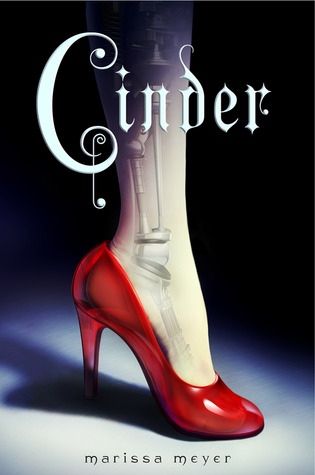
Cinder by Marissa Meyer
I was skeptical when I heard the concept of a cyborg Cinderella, but Marissa Meyer pulled it off.  Cinder was a refreshing and original fairy tale retelling while also being an engrossing piece of science fiction.  I highly recommend this fun read, and I’m eagerly awaiting getting my hands on Scarlet.
Read my review: Book Review of Cinder

Lola and the Boy Next Door by Stephanie Perkins
I’m not a big reader of contemporary fiction, but this book won me over.  It may even have made me want to become more open to contemporary fiction!  I loved all the quirky characters, and I especially loved Cricket.  I’m a new Stephanie Perkins fan!
Read my review: Book Review of Lola and the Boy Next Door

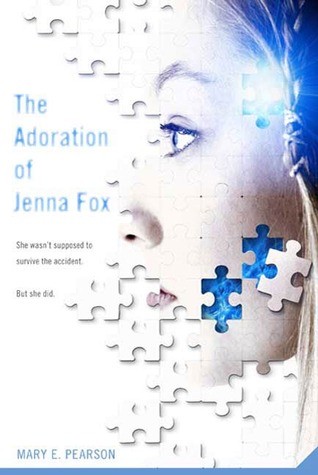
Adoration of Jenna Fox by Mary E. Pearson
This book came out awhile ago, and I finally had to read it for my graduate class on dystopian lit.  I absolutely love how this book made you think about big ideas, like the very essence of humanity.  I recommend to all fans of science fiction.  A sequel came out this year, and I definitely want to check it out!
Read my review: Book Review of Adoration of Jenna Fox

Little Brother by Cory Doctorow
In our technology driven society, this book is a MUST READ.  An action packed story that shows how the technology we use everyday can so easily be used against us.  Doctorow does a great job of making techie language accessible to any reader.  A great book to get for the guys in your life.  I’m so excited there is a sequel coming out, Homeland, in 2013.
Read my review: Book Review of Little Brother

Feed by M.T. Anderson
This book also came out awhile ago and I’d heard a lot of buzz but never picked it up.  This was one of those books that I finished in tears, though most people find it memorable for its use of language and the world Anderson creates.  I’d say this is another MUST READ for our technology driven society.
Review is forthcoming…

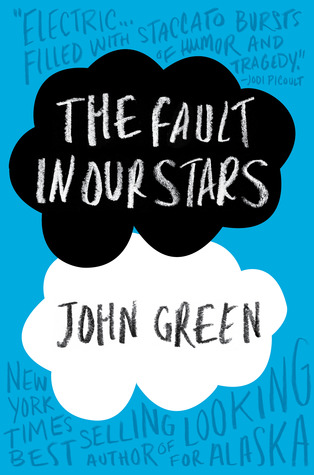
The Fault in Our Stars by John Green
Like pretty much everyone in the universe… I think John Green is genius and this book is a work of art.  I simultaneously laughed and cried while reading about Augustus Waters and Hazel Grace.  John Green is a master of characterization.  If haven’t read this book because you’ve heard it will make you cry… JUST READ IT ALREADY.
Review is forthcoming…

Hex Hall by Rachel Hawkins
I read this entire series and enjoyed every minute.  While it’s no Harry Potter, I still was enchanted with a juvie boarding school for teens caught displaying their magical powers.  Sophie is a likable heroine complemented by a fun cast of characters.  But the standout feature of the Hex Hall series is how FUNNY the books are!  The books are filled with humor that caught me giggling unawares.
Review is forthcoming…

Obsidian by Jennifer L. Armentrout
I blew through Obsidian, Onyx and Shadows (prequel) in just a few days.  These are guilty pleasure books.  They are meant to be fun and not taken too seriously.  Aliens… who happen to be really good-looking teenagers with amazing superpowers.  The action and romance are both intense and will keep you furiously flipping the pages.  I’ve bought book three, Opal, and am restraining myself from picking it up before I finish the book I’m currently in the middle of.
Review is forthcoming…

A Long Walk to Water by Linda Sue Park
This is the amazing true story of a boy named Salva who escaped civil war in Sudan.  Salva went through so much hardship, but became a truly inspirational person who has had an astounding impact on the world.  This book is written for a middle grade audience, but can be appreciated by anyone.  A short, quick read that will inspire you.
Review is forthcoming…

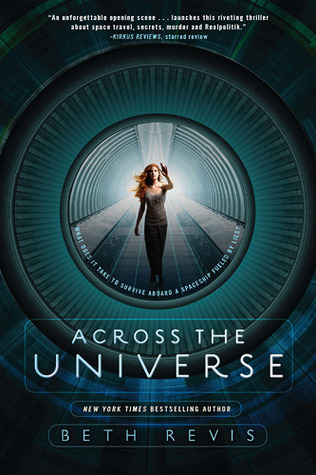
Book Review: Across the Universe

Across the Universe
by Beth Revis
Purchased/Paperback
Genre: Sci-Fi/Dystopian
Big Themes: Space Travel, Cryogenics, Murder Mystery, Leadership, Individuality
*Grad School Text*

Note: This will be an abbreviated review because it should have been reviewed months ago, but I’ve been on a blogging hiatus.  The book isn’t fresh enough in my mind to do a detailed review, but I wanted to post my overall thoughts.

Summary: Along with her mother and father, Amy is cryogenically frozen for space travel to awake three hundred years later on a new planet.  Except she doesn’t awake with her parents on a new planet. She is unfrozen prematurely and almost dies.  Was someone on the spaceship trying to kill her?  And why?

What I Liked:

AMAZING First Scene:  Beth Revis sets up the reader where we have the opportunity to empathize with Amy through a memorable, tense, and excruciating scene.  The wealth of sensory details places the reader in the scene and forces them to imagine what it would be like to be cryogenically frozen.

The Blend of Genres: This book is part science fiction and part murder mystery and part dystopian with a smidgen of romance.  This was an unexpected and exciting blend.

The Science Fiction Concepts: The book felt really fresh because there hasn’t been much space travel in mainstream YA.  I liked all the future technology as well as the emotional toll that this technology took on the characters.

What I Didn’t Like:

Humans Mating: The way humans mate in this book is pretty disgusting.  I know that was the whole point, but it was still disturbing to read.

The End Reveal: No spoilers, but I wasn’t happy with who was responsible for opening Amy’s cryo chamber.  I felt like Beth Revis had been hiding information that we should have had.  And that the trick of having an unreliable narrator was not executed well.  But that’s just my opinion.

Overall: 

I gave this book four stars after I finished it.  I thought it was a fun and fresh take on all the dystopian we’ve been seeing lately.  I still haven’t read A Million Suns, and haven’t rushed out to buy it… which makes me wonder if I should have given the book four stars.  On a side note– The new covers for this series are hideous.

Returning to the Blogosphere!

Back in September, I put my blog on hiatus, saying that I would be back in January.  I can’t quite stay away that long… I’ll be returning a week early!

Reasons for Returning:

  1. My fall graduate course is completed.  It was even more work than I expected, but I have several posts scheduled where I’ll be sharing writing tips gained from this class.  (One big post on pacing and another big post on emotions as well as a few other little posts on other topics.)  
  2. One of my favorite times of year in the blogosphere is when everyone posts their favorite reads of the year.  I want to be able to participate in the discussion of the best books of 2012, as there were some GREAT ones!  And I want to make sure there weren’t any excellent books that I missed!
  3. I’ve made some outstanding progress on my novel and have established a solid writing routine.  Without the strains of a graduate class, I’m confident I’ll be able to finish a first draft before winter is over while balancing a blogging routine.
  4. Blogging helps me reflect on my reading and identify the traits I admire in other writers so that I can incorporate those traits into my own writing.  I also use my blog to reflect on my own writing process.  This thoughtful reflection is a necessary part of my writing process, and if I can’t do it for a graduate class, then my blog will be my tool.
  5. I have a fun announcement… that will be its own post… coming soon…
I can’t wait to return to the blogging!  Stay tuned for book reviews, writing posts, and maybe even a few memes… Can’t wait to reconnect with people!  Look for me in your comments!

Going on a Hiatus

This is something that I really did not want to have to do, but I have come to the realization that it is something I need to do.  I’m putting my blog on hiatus.

I sincerely love blogging.  I love sharing what I thought of books.  I love the blogging community.  I love discussing books with other bloggers.  I love hearing about new books coming out.

But there is one thing that’s more important to me right now, and that is writing my novel.  And because I love blogging so much, it is too easy for me to get caught up in writing blog posts and posting comments instead of the other kind of writing I should be doing.

Besides being a full time teacher, I’m taking a writing course this fall that is going to involve presentations, critiques, writing exercises, and regular submissions.  Just looking at the syllabus made me question whether I’d have much free time this fall.

And then I sat down and did some goal setting.  I have set a goal for myself to have a revised and finished novel ready to query by this time next year.  In order to do that, I need to have a finished first draft by January 1st.  Which is entirely doable if I stick to a writing goal of 3,000 words a week.  I’ve consistently met this goal in the past, and know that it is something I can accomplish.  But not if I have distractions.

And because I love blogging so much, it is a distraction.

I want to maintain the friendships I’ve started with fellow bloggers, so I’m going to set aside two hours a week to comment on my favorite blogs.  (I’m so dreadfully behind right now, but thanks to Labor Day, you may hear from me tomorrow morning.)  Know that I’m still reading your blogs, often from my iPhone as I sit in a dreadfully boring school meeting, and you’re making me smile.  But I may be a more silent, mysterious follower.

Much love, and hopefully you’ll hear from a very happy me on January 1st who is holding a complete 1st draft of a novel in her hands.

(I’ll still be on goodreads because I HAVE TO keep track of what I’m reading.  I won’t be posting extensive reviews, but if you want to see what I think of books I’m reading, here’s my goodreads profile.)

2012 National Book Festival Schedule

The National Book Festival is my favorite book event of the year.  It’s in Washigton D.C. on the National Mall and is TOTALLY FREE.  The DC Metro is easy to use, so you really don’t have to worry about driving or parking in the city.  I’ve been when it was raining (very cold and miserable) and when it’s sunny (glorious).   I’ve gotten books signed in the past, but what I usually prefer to do is find a good spot in the Teen Tent and sit and listen to speakers all day.  If you want to get books signed, just be prepared to wait in lines and realize that you will miss out on other authors speaking.

If you want to know what the Book Festival is like, I recommend reading last year’s post: National Book Festival 2011

The event is very well-organized and this year’s panel of authors looks fantastic.  Authors I’m especially excited about: John Green, James Dashner, Walter Dean Myers, Lois Lowry, Maggie Stiefvater, Melissa Marr, and Avi.  This year’s festival is Saturday, September 22 and Sunday, September 23.  See a full list of speakers below:

Saturday, Children’s Tent
Time                Author
10:00-10:45 Laura Amy Schlitz
10:55-11:40 Peter Brown
11:50-12:35 James Dashner
12:45-1:30        Jewel
1:40-2:25         Natalie Pope Boyce
1:40-2:25         Mary Pope Osborne
2:35-3:20         Jerry Spinelli
3:30-4:15         Chris Raschka
4:25-5:10         Anna Dewdney

Saturday, Teens & Children’s Tent
Time                Author
10:00-10:45 John Green
10:55-11:40 Mike Lupica
11:50-12:35 Walter Dean Myers
12:45-1:30        Lois Lowry
1:40-2:25         Maggie Stiefvater
2:35-3:20         Melissa Marr
3:30-4:15         David Levithan
4:25-5:10         R.L. Stine

Sunday, Children’s Tent
Time                Author
12:00-12:45 Bob Balaban
12:55-1:40        Patricia Polacco
1:50-2:35         Michael Grant
2:45-3:30         Erin E. Stead
2:45-3:30         Philip C. Stead
3:40-4:25         David Ezra Stein
4:35-5:20         Avi

Teens & Children
Time                Author
12:00-12:45 Bryan Collier
12:55-1:40        Ellen Hopkins
1:50-2:35         Siobhan Vivian
1:50-2:35         Jenny Han
2:45-3:30         Jacqueline Woodson
3:40-4:25         Sharon Flake
4:35-5:20         Sonia Manzano

More information on the National Book Festival can be found on the Library of Congress Book Festival Site.

Let me know if you’re thinking of going!  I’d love to see you there!

MIA: Beach & Reviews to Come

I realize I’ve been dead on the blogosphere.  I’d intended to have a few days at home before heading to the beach, but then had some car issues that forced me to change my plans.  I’m currently vacationing at the beach where we have no internet service.  (I’m blogging from Panera right now.)  I have my iPhone, and have been reading lots of wonderful blog posts that I’m eager to comment on, but commenting is not convenient via iPhone.  Can someone please invent an app for that?!?!

I’ve been reading loads, and will have lots of reviews to type up when I get home. Here’s what reviews will be coming soon:

Across the Universe by Beth Revis (much delayed from grad school)

Feed by MT Anderson (much delayed from grad school)

Iron King by Julie Kagawa (finished reading)

Iron Daughter by Julie Kagawa (finished reading)

Iron Queen by Julie Kagawa (in progress paperback)

Iron Knight by Julie Kagawa (purchased)

Falling For Hamlet by Michelle Ray (in progress hardback)

Souless by Gail Carriger (in progress eBook)

And here are a few pics from my vacation:

Tanning on the Beach
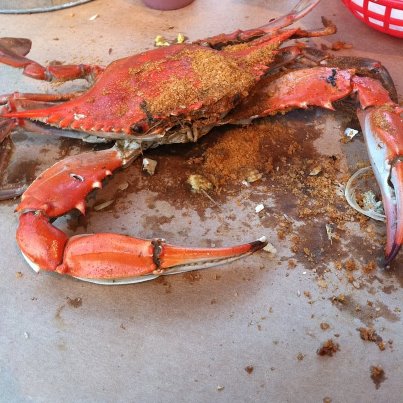
Eating Crabs