Golden Books Speaker

We had the pleasure of hearing Diane Muldrow, editor of Golden Books at Random House, speak yesterday. She mostly went over the history of Golden Books, which was fascinating. The lecture almost made me want to write a picture book… but I don’t think that is going straight on my to-do list for now.

Some cool info I learned:

The Poky Little Puppy is the bestselling children’s book of all time.

Golden Books revolutionized children’s publishing because they were the first reasonably priced children’s book series. Before that, children’s books were expensive, glossy paged, handcrafted things that people would only buy around the holidays. The first 12 book run of Golden Books were 25 cents each.

Golden Books are featured in the Smithsonian because they are considered an American Icon.

Many Golden Book illustrators also worked at one time as Disney animators. Golden Books and Disney have a long history of working together, and Disney actually approached Golden Books about doing books that tie in to their movie releases. There is a whole Disney division at Golden Books

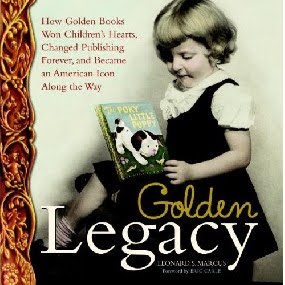
If you want to read more about how Little Golden Books changed the face of children’s publishing and became an American icon, check out the book “Golden Legacy.”

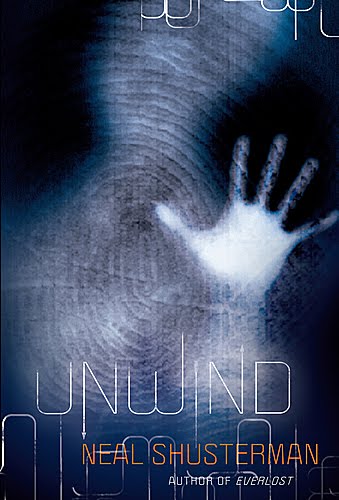
Unwind by Neal Schusterman


I read this book last summer and it really stuck with me. A bunch of my more mature 7th graders read it over the school year and voted it as their favorite book of the year.

This book was nominated for the 2009-10 Maryland Black Eyed Susan award. I wouldn’t call it a light read. Very serious subject matter and there is one very disturbing chapter.

The book’s premise is that instead of abortion, children can be “unwound” between the ages of 13-18 if they have not proved themselves useful to society. Unwinding means surgically cutting the teens up into “parts” which are then used like organ donations–every part of each teen is used.

This was the kind of book that makes you think. You rooted for the characters and kept turning pages to find out if they’d make it to the end without getting “unwound.” I think it’s pretty mature subject matter for middle schoolers, but would be more appropriate for high school aged kids. However it was definitely an original sci-fi concept and I haven’t read anything like it.

Craft of Writing Day 2

I am going to LOVE my Craft of Writing for Children class. The teacher is so lovable, which may in part be due to the fact that she has mannerisms that remind me of my grandmother who recently passed away. (Her middle name is even Ruth, which was my grandmother’s name.)

Today we had a fantastic discussion about the book When You Reach Me (see previous post). Then we did a writing exercise. I’d done this particular exercise before. It’s where you essentially create a biography of your character. You answer everything from the age and gender to their favorite color and music. She told us to think of a character, and then for half an hour she asked us questions like, “What kind of childhood did they have?” or “How do they react to conflict?” I filled 4 handwritten pages with information on one character.

This is a fantastic exercise when you are just beginning a writing project, and I hadn’t done it in awhile because I have several projects that I’ve been working on for awhile. I did the exercise on an entirely new character for an entirely new project that had been brewing in the back of my mind. I really don’t think there is a better feeling for a writer than that first time you work on a new project. It’s like electricity charges your brain and you can’t write or type fast enough.

I have a student whose name I love, and I’d told her I might use her name someday in a story. Her name got me going. Then the story idea is going to be a science fiction/dystopian/survival story. I’ve been reading a lot of that type of stuff lately, and love the action and sense of urgency those plots create.

If you want to read some great sci-fi/dystopian/survival stories, here are a few:

-Life As We Knew It, The Dead and the Gone by Susan Beth Pfeffer
-Hunger Games trilogy by Suzanne Collins
-Atherton series by Patrick Carman
-Unwind by Neal Schusterman

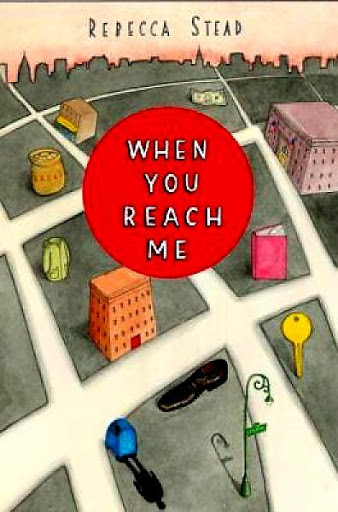
When You Reach Me by Rebecca Stead

This year’s Newbery winner was When You Reach Me by Rebecca Stead. I was not that impressed when I finished the book, but following my discussion in class, I developed a greater appreciation for the book and can see why it was chosen.

Summary (without giving too much away):

A twelve year old girl in 1970s New York City is helping her single mom prepare for the gameshow $20,000 Pyramid. She deals with losing friends and making friends, but the mystery that will grab the reader from the beginning is Miranda begins to receive mysterious and desperate notes asking for her help.

Why did this book win the Newbery?

According to Newbery’s criteria, “The book should display respect for children’s understandings, abilities, and appreciations.”

I think the voice of Miranda was both accurate and credible. Her views of New York, adults, friendship are all typical of a child her age and voiced in such a way that you believe everything she says. The book showed a lot of progression in how Miranda views the world, particularly through her relationships with her friends and where she fits into the world. Many of the ways and words in which Miranda expresses herself are distinctly child views, but not childish. Just a first understanding of how things work. For example, the chapter about the dentist. Miranda expresses that it’s weird to go to the dentist in school, is lectured by Wheelie, and then thinks about what her mother would do if she knew about a free dentist at school. Miranda reveals her innocence, learns a lesson, and then uses her parent as reference to frame the information, which is typical of a child. Miranda also has a fantastic sense of humor, and makes countless wry statements that will have you smiling to yourself, if not laughing out loud.

The well-knit ending probably earned this book the quality of being “individually distinct.” I don’t want to ruin anything, but the ending brings the whole book together, and you see that EVERY SINGLE MOMENT had a specific purpose within the story.

Why I didn’t like the book initially:

It irked me that we, the readers, were purposely left out of the loop when it was clear the narrator knew the whole story at points. I realize this would have ruined the surprise ending, but I don’t like that the author withheld information known to the narrator. I think this is a cheap suspense technique that only confuses and frustrates your reader.

My favorite part of the book:

The similes. The author created some really fresh and original images through the use of similes. This book had some really memorable images that will stick with you after you finish. For example: There was one description of a girl who needed to use the restroom in class: “Alice Evans was squirming in her chair like she was doing the hula dance.” That part made me giggle!

I’d love to hear what other people thought of this book!
Shiver by Maggie Stiefvater


The sequel to this book is coming out in about a month, and I’m hoping I can get it on my Kindle like I did the first one.

The book is a cool twist on werewolves. When you’re bit, you have a certain number of years that you’ll be able to change back to human. Transformations are caused by cold temperatures, so you are human in the summer and change back to wolf when it gets cold again. It was a fantastic way to create tension because you wanted Sam to stay human and the author constantly put him in situations that threatened him with cold.

Cute love story. Wanted to recommend it to my middle school kids who love Twilight, but then there was sex and I couldn’t justify recommending a book to a class of 12 year olds with teen sex. Oh well.

Maggie Stiefvater is a new fav and I’ll be looking for the sequel Linger next. Her blog is super cute and I read it often. Check it out here: http://m-stiefvater.livejournal.com/

Hist. & Crit. Day 2

I wondered if this mandatory intro class (History and Criticism of Children’s Literature) would be the kind of class where you do the reading, but then come to class and the professor rehashes everything you read, thinking he’s giving you new insight.

Today’s class was pretty much that. Our teacher is knowledgeable and had all these notes he’d taken on the text and an outline for the lecture, but then he just talked for 3 hours. He went over what we’d already read in a more confusing way, told a lot of stories from his own life, talked about The Hobbit a lot, bragged some more about how he’s friends with the author of the book.

Let’s just say I didn’t leave class today feeling enlightened. In fact, I needed a nap.

If you want to know the History of Children’s Lit, I can break it down for you real fast:

1600s-1800s = Children’s Literature was heavily influenced by religion. Things written for children were didactic and strove to teach children religion and moral life lessons. It was pretty boring stuff.

1800s = People start to get the idea that maybe children’s literature should be entertaining. Though, it’s more along the lines of “If we write something entertaining, maybe the didactic message we are trying to send will reach more children and sink in.”

1900s = The period before WWII saw many of the current classics: Alice in Wonderland, Pooh, Nancy Drew, Wizard of Oz, Little Women, Secret Garden, Beatrix Potter, the list could go on forever. Marketing and commercial publishing of children’s lit didn’t really come about until the baby boomers started demanding things to read to their children. And the Young Adult Market didn’t really start to define itself until the 60s, with a slew of controversial teen stories coming out in the 70s and 80s.

Granted, that was a rough and brief timeline, but I personally think it’s all you need to know…

I’m hoping this class will get better when we start talking about the actual books themselves. But it looks like I’m going to love my Craft class better.

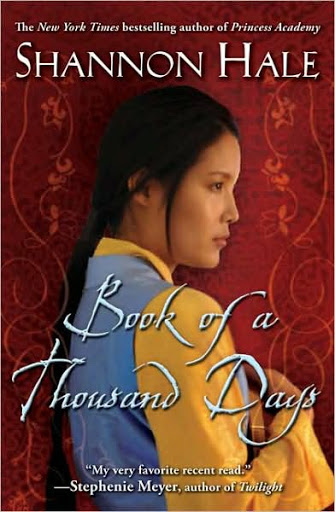
Book of a Thousand Days by Shannon Hale

This was fantastic. I would recommend it to anyone, a great summer read. Probably my favorite Shannon Hale book, which is saying a lot as I enjoyed both Princess Academy and Goose Girl.

This Mongolian/Chinese fairy tale is a cross between Rapunzel and Cinderella. The story is told in diary form by a maid named Dashti who agrees to be locked in a tower for seven years with the Lady she serves. Dashti became such a real character through the diary and is a heroine that is worthy of respect and admiration. Shannon Hale always has strong female characters, but Dashti now has a special place in my heart.

The story is told beautifully. The characters are memorable. The setting is thoroughly unique and believable. (In fact, I thought the story was based on real legends/mythology and was shocked to discover Hale made most of it up!) The plot is seamless. The resolution is satisfying.

I highly recommend this book to girls both young and old. Wonderful book!

2nd Day of Class

The second class I’m taking is “Craft of Writing for Children” and we met for the first time today. I think this is going to be my favorite class despite the fact that I wasn’t a huge fan of the reading list.

Here’s the story behind the class: It was supposed to be taught by Professor L, but Prof. L couldn’t teach it. However, the reading list had already been distributed to students and student had already ordered the books. Professor P agreed to teach the class and consented to use the original reading list.

So what’s wrong with the reading list? It’s almost all realistic fiction, with the exception of two books that are historical fiction. I’m not a big reader of realistic fiction. I prefer, fantasy, science fiction, adventure, and mystery. Many of the books on the reading list dealt with topics like drugs, abuse, depression, eating disorders, suicide, etc. And if you know me at all, you know that’s not my cup of tea. I read books to escape the real world, not read about real world problems.

However, I think I’m going to like this class because the teacher recognized the fact that the reading list was focused on just one genre, so she’s letting us explore other genres through individual presentations. And she’s a nurturing “mom” type teacher, but at the same time VERY knowledgeable about the subject matter.

Though she’s a bit obsessive compulsive about how we keep our notes. She wants us to set up a binder with sheet protectors and have our notes color coded with highlighters. I spent $40 at Staples on supplies for her class…

I have lots of work to do for tomorrow’s class that I should get started on. Peter Hunt’s Intro to Children’s Lit will put you to sleep, and already has for me…

On being in the South

I have never seen more mullets, missing teeth, or pick-up trucks than I have in the last few days. I’ve seen men twice my age with hair as long as mine.

HOWEVER– the customer service and politeness everywhere I go is refreshing. Please, thank you, my pleasure, and smiles have been my experience at every store and fast food chain I’ve been to.

So, southern hospitality is definitely a reality.

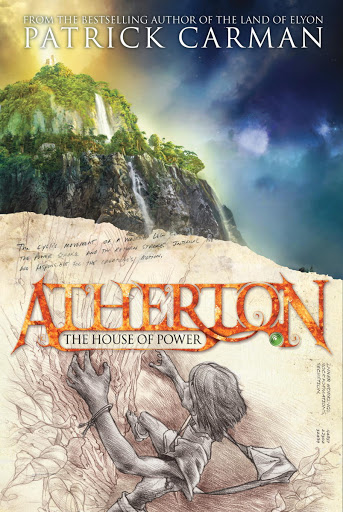
Atherton series by Patrick Carman

Inspired by my last post, here’s a bit about the Atherton series by Patrick Carman!

In the future, Earth is too dirty to support human life. A genius scientist created a satellite world that orbits Earth called Atherton. However, the people of Atherton don’t realize they are part of an experiment. Chaos breaks loose when the center of Atherton begins to sink into the core of the satellite.

Atherton: House of Power

Read on the recommendation of two students and I’m very glad I did! An exciting story in a fascinating world. In fact, the world steals the show! The setting is a character in itself, and while completely unfamiliar, Carman has masterfully crafted a world that anyone can picture, smell, and taste. Characters were memorable and spunky. Great science fiction for kids!

This was the first book I read on my Kindle! 🙂

Atherton: Rivers of Fire

The author has a clever imagination, and the worlds he creates are unique a vivid. The sequel to “House of Power” was well-done and satisfying. I sometimes get a little annoyed by the 3rd person omniscient point-of-view, and would prefer a 3rd person limited. Perhaps it bothers me because not many authors write in that point-of-view for children/YA, and sometimes it felt like Carman was “telling not showing.” This series was supposedly inspired by Mary Shelley’s Frankenstein, which I am starting to see, though it makes me want to do a fresh read of Frankenstein to see if there are closer similarities.

I think these books would be fantastic to use in schools…

Can’t wait to read the last one!